Goal:
Design an app and a responsive eCommerce website that enables gamers to purchase gaming equipment
Target Users:
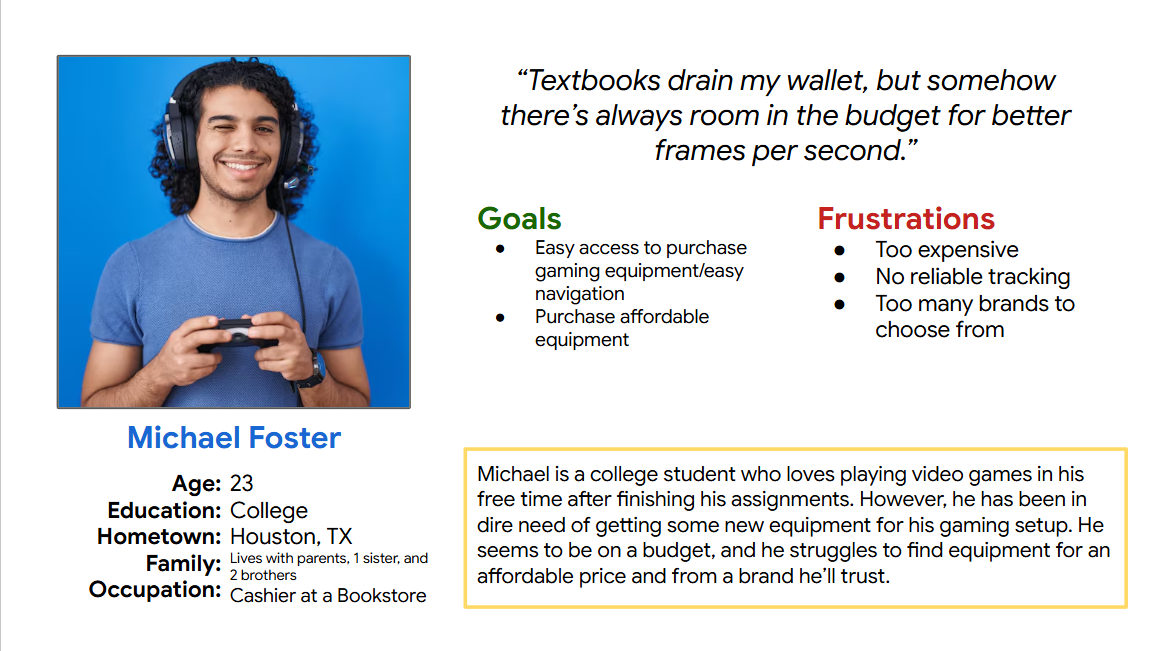
College student gamers
Objectives:
Buy reliable gaming gear without overspending, and find products that match their setup and games
Role:
UX Designer (End-to-End)
Pain Points:
College students who game often struggle to find reliable, affordable gaming equipment without spending hours comparing specs across multiple websites
Challenges:
College students are highly price-sensitive and comparison-driven.
Competing with established platforms like Amazon, Best Buy, and specialty gaming retailers.
Ensuring consistency between mobile app and responsive website.
Constraints:
Limited ability to rely on premium pricing strategies or high-margin upselling.
New platform lacks brand recognition.
Different interaction patterns and layout behaviors across devices.
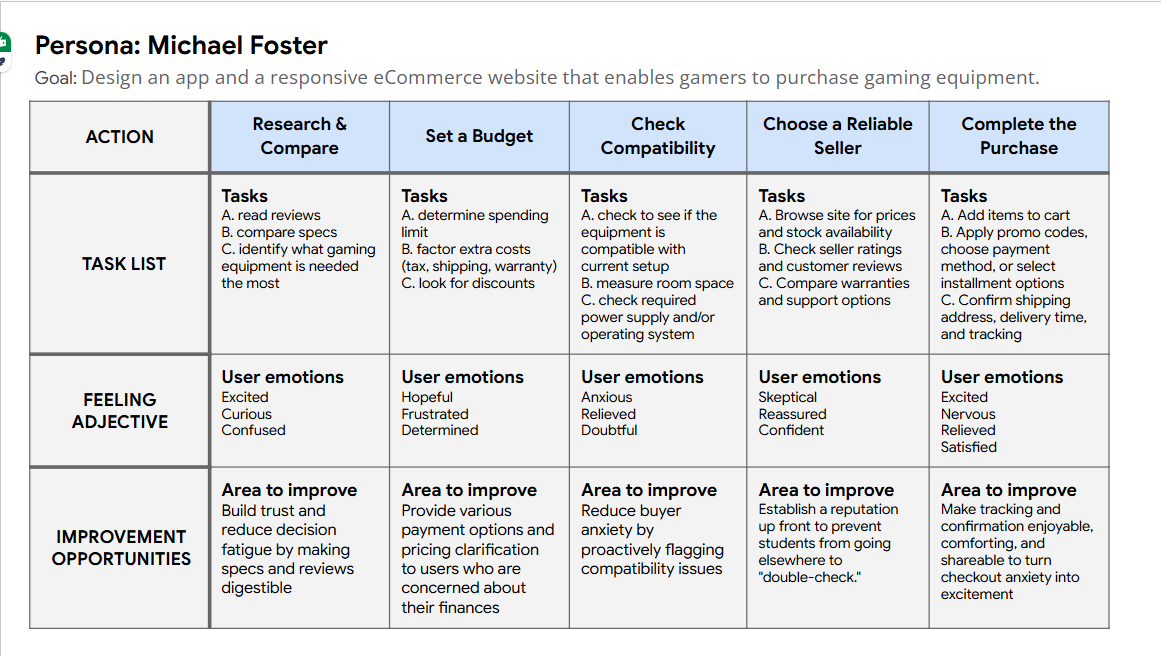
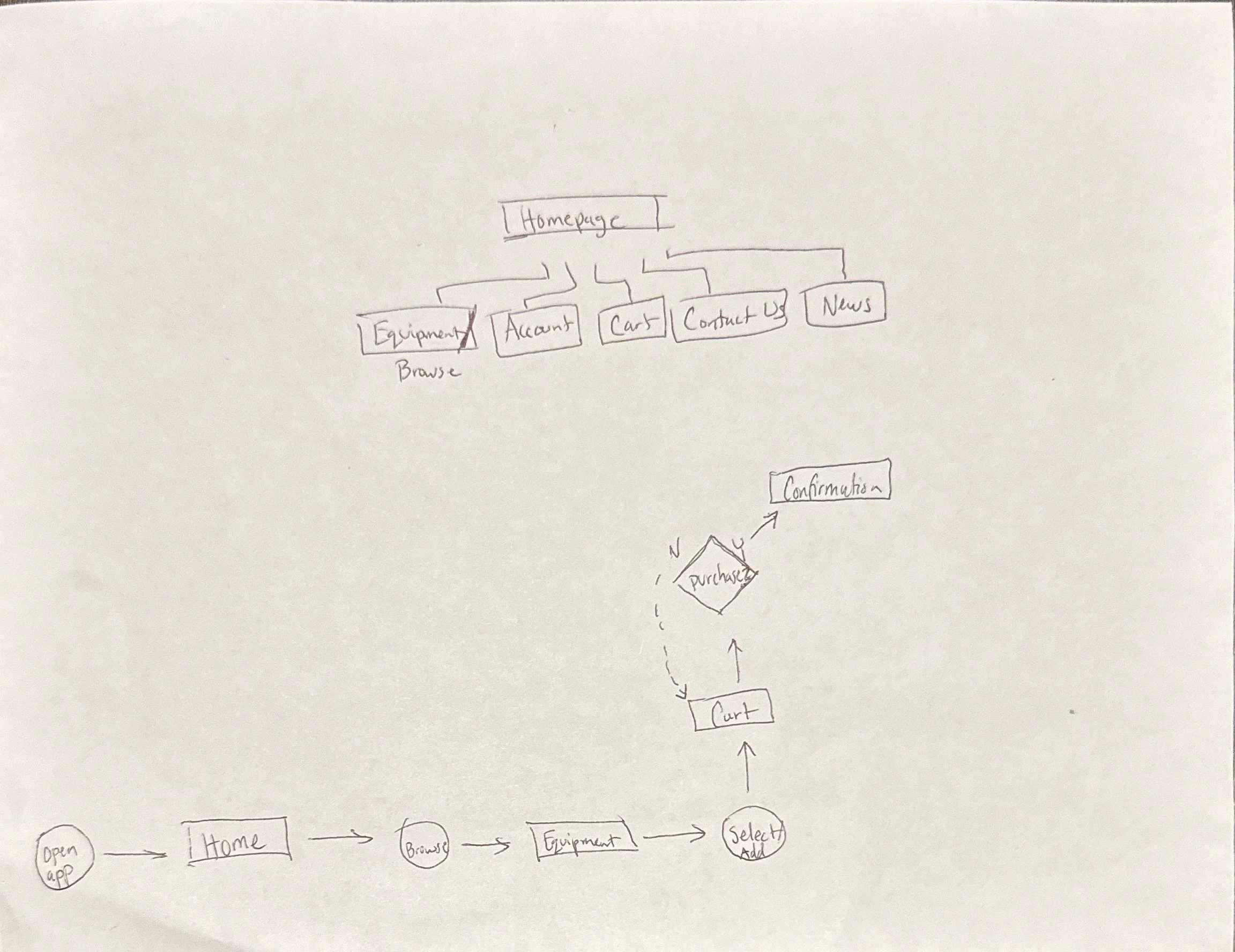
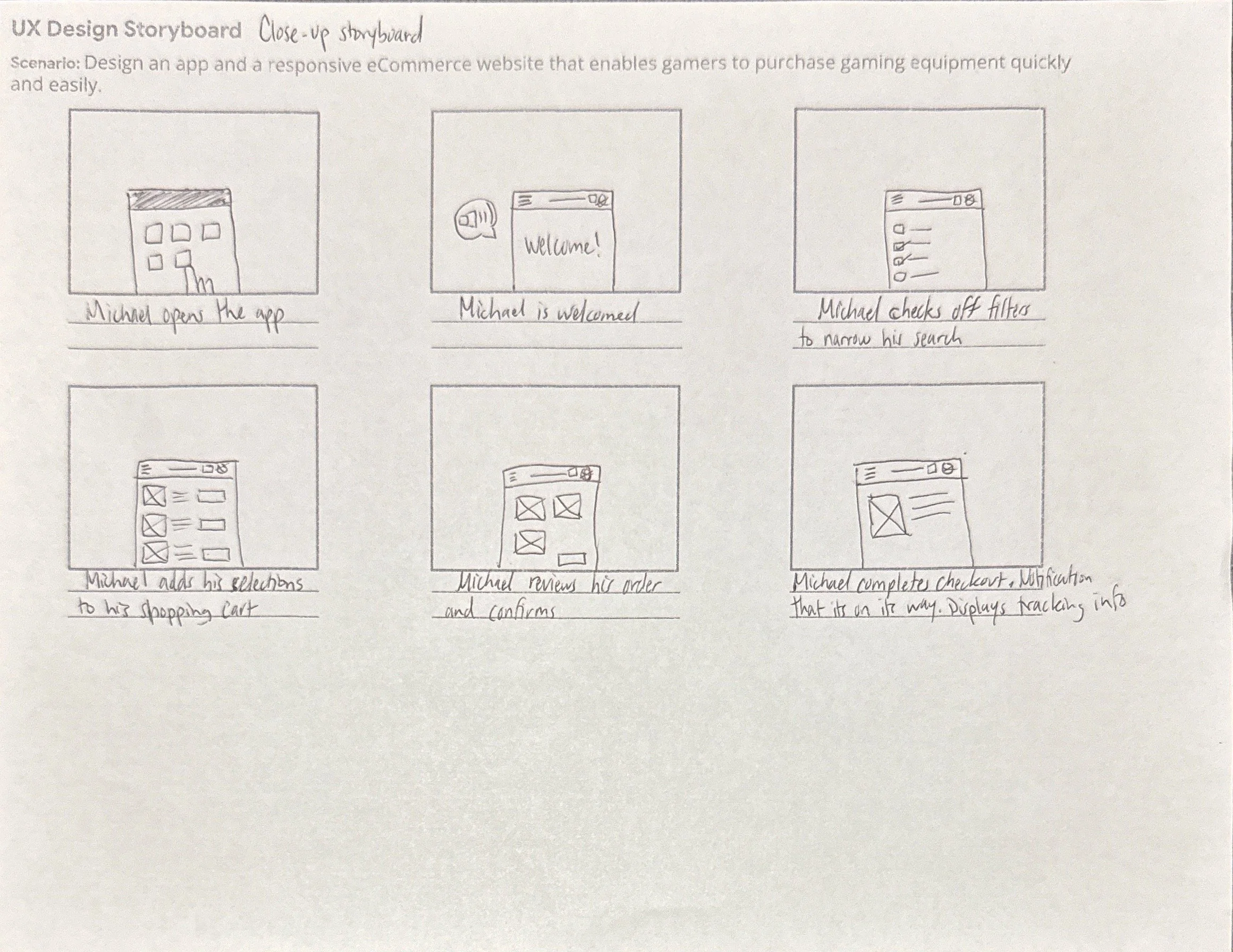
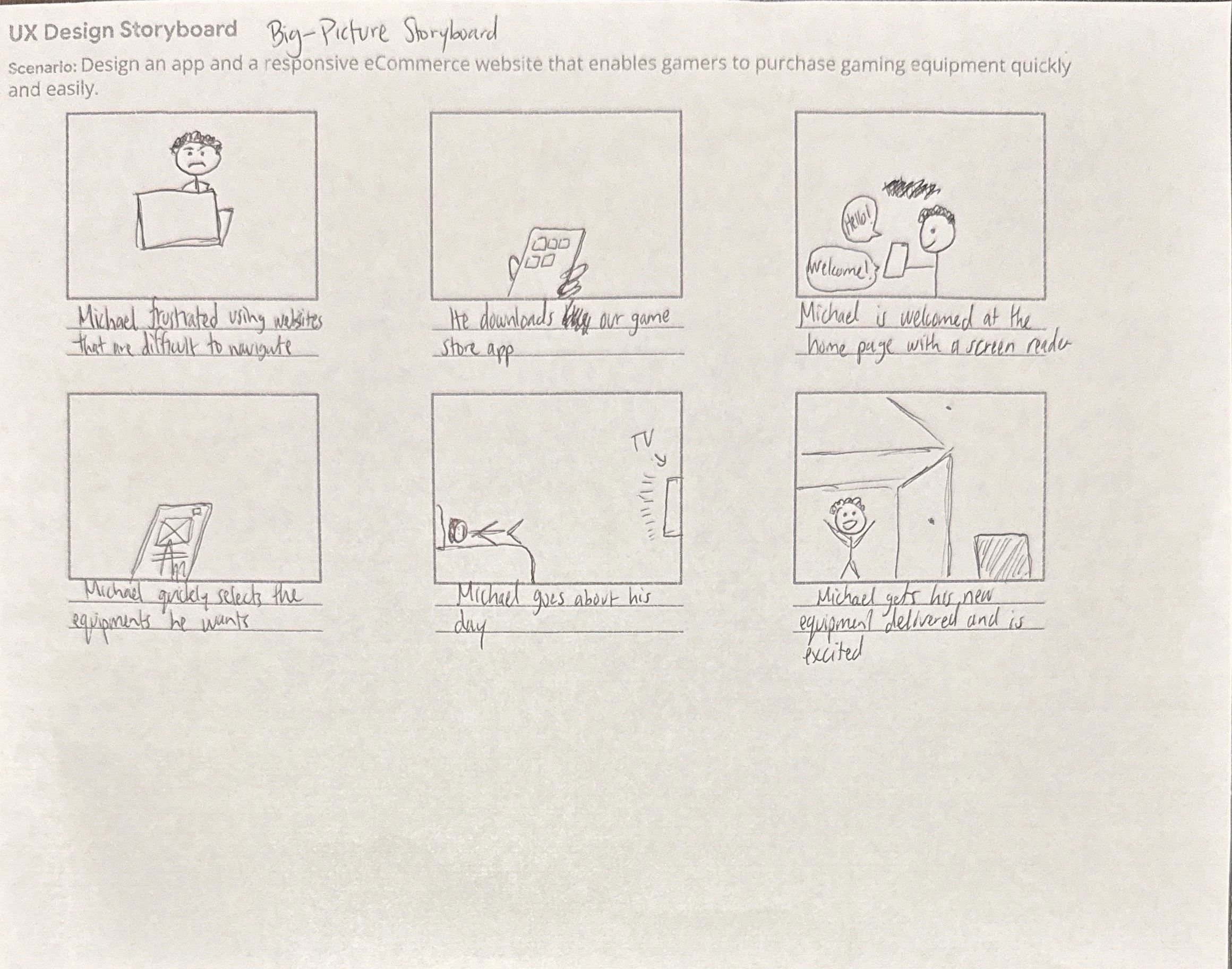
User Persona and Storyboards:
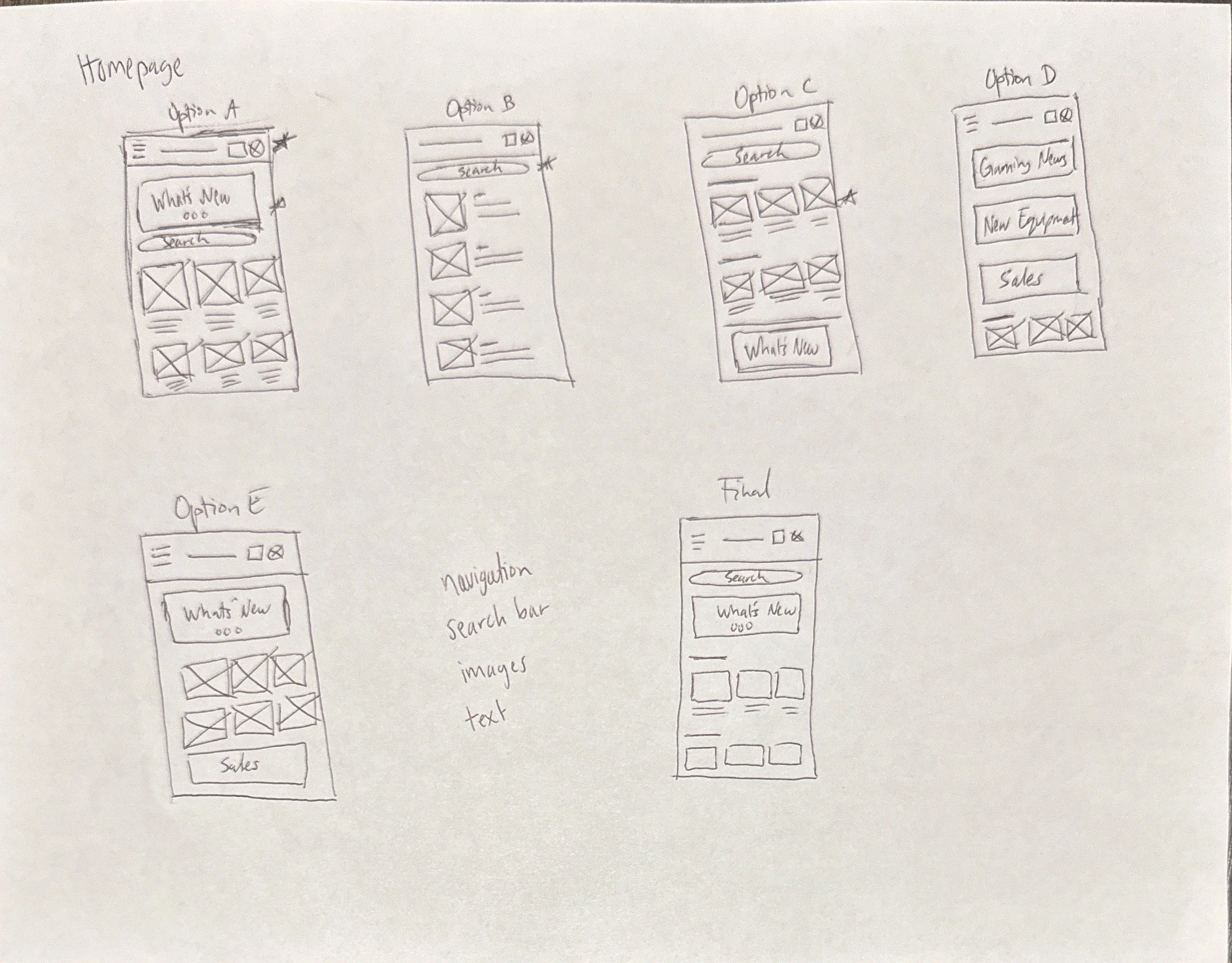
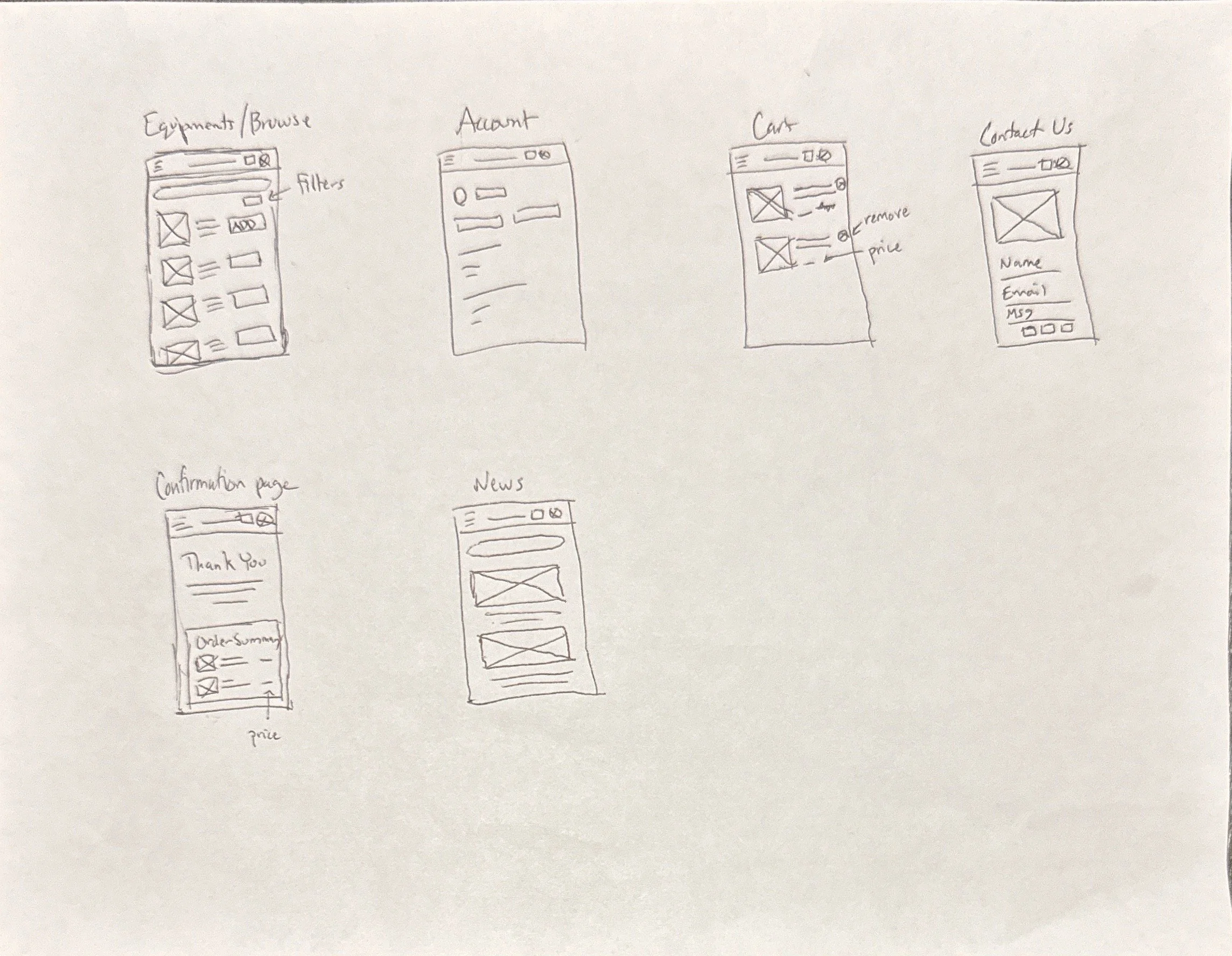
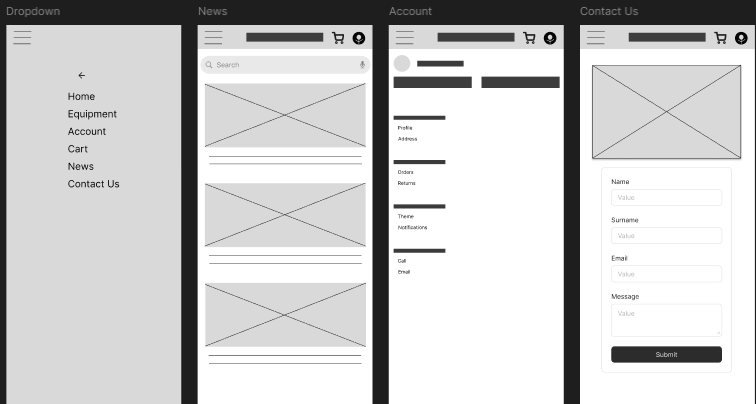
Paper Wireframes:
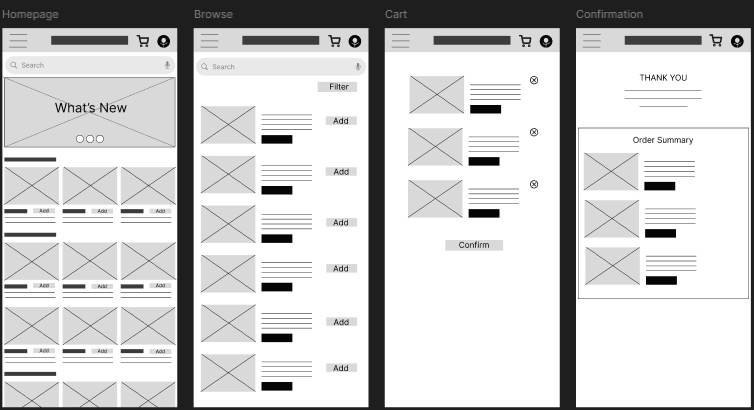
Digital Wireframes:
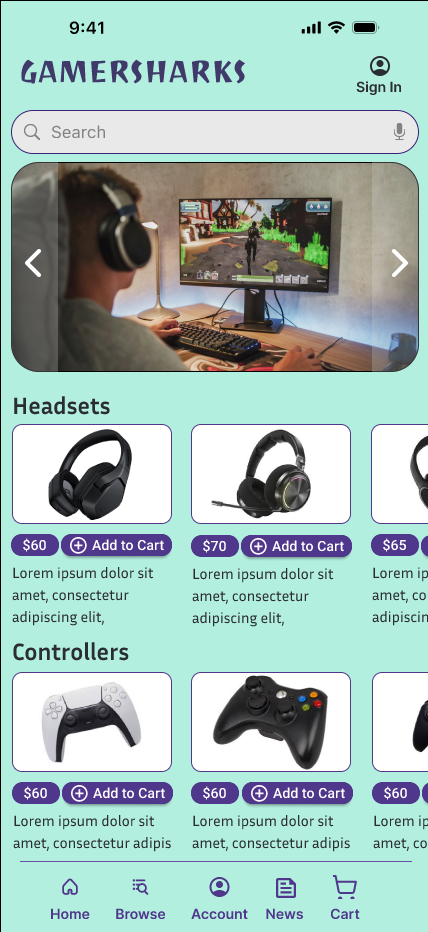
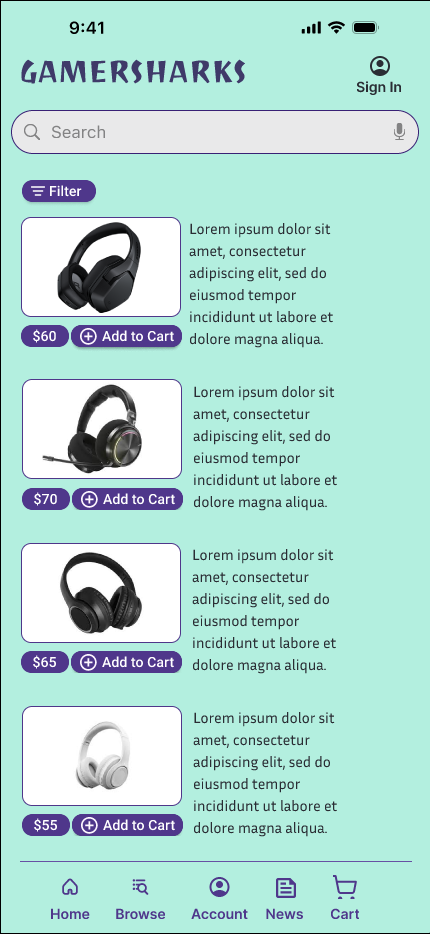
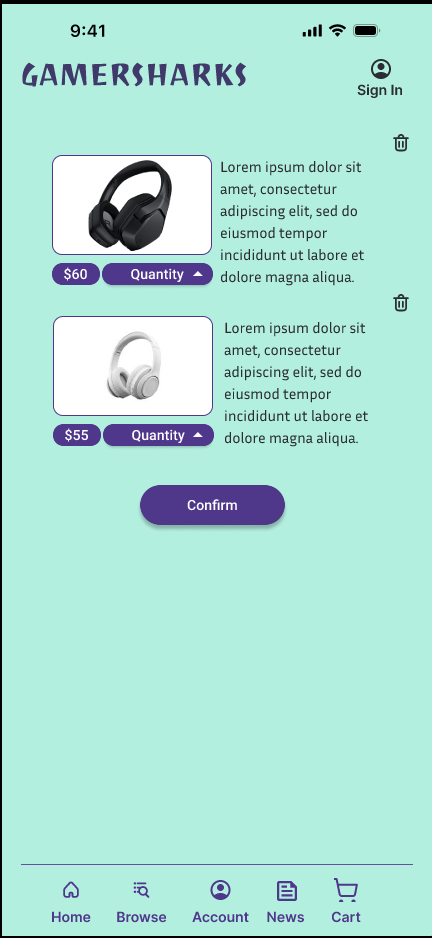
Mockups:
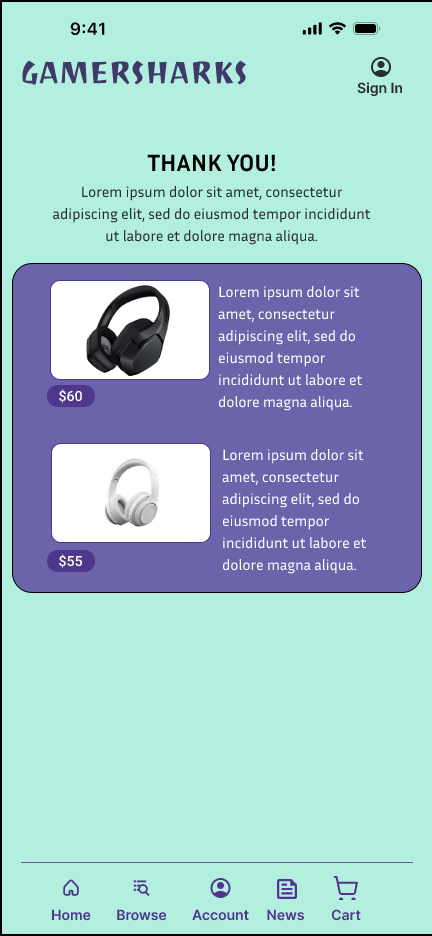
Hi-Fi Prototype:
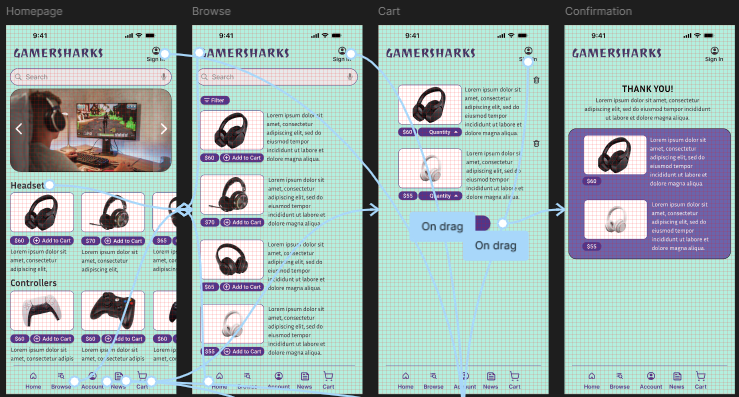
Insight 1: Mobile-first behavior dominates
User Need:
“I want to browse quickly between classes.”
UX Decisions:
Mobile-first layout
Sticky bottom navigation (Shop, Search, Cart, Profile)
Persistent search bar
Why:
Designing for speed and thumb-friendly navigation supports real-world usage patterns
Insight 2: Gamers feel overwhelmed by technical specs.
User Need:
“Just tell me if this works for my setup.”
UX Decisions:
Compatibility checker (PC specs, console type)
Tags like “Best for FPS” or “Great for RPG immersion”
Side-by-side comparison tool
Why:
Translating technical specs into contextual benefits reduces cognitive load
Insight 3: Students are budget-conscious and deal-driven.
User Need:
“I want quality gear, but I can’t overspend.”
UX Decisions:
“Best Value” and “Budget Pick” tags
Transparent pricing breakdown (no hidden fees)
Why:
Reducing financial anxiety increases trust and improves conversion
Lessons Learned:
I’ve learned how to improve my product and add features that could better help users navigate through my app and find what they are looking for. In the future I plan to implement such features such as compatibility checkers, side-by-side comparison tools, and tags. I will plan more usability studies to help better the product for users. I will also create more personas for my projects since there are many different types of users of different representations.